It’s one thing to admire stories of courage in the Bible, but everything changes when fear lands right in your own life. That icy knot in your stomach before a diagnosis, your mind racing at 2 a.m., or the heaviness in your chest before a hard conversation—those moments leave you exposed and unsure.
No matter how much you talk about faith and trust, the space between what you say you believe and what you actually feel can seem impossible to cross.
I’ve lived in that tension myself. I remember sitting in my car, palms sweating, about to walk into a meeting I was dreading.
I honestly wondered if those words of encouragement from Jesus could cut through fear right then, in the middle of my mess. That’s why what Jesus says and does about fear and courage feels different to me—it isn’t theory, it’s meant for the times when fear is real and raw.
Imagine a dark night on the lake. The disciples are exhausted, fighting the wind and waves, when suddenly they spot someone walking across the water.
Their terror wasn’t just about the storm—it was the shock of seeing something that shouldn’t be possible. Their hearts must have pounded.
Right in the chaos, Jesus calls out, “Take courage. It’s me. Don’t be afraid.”
What strikes me every time is that Jesus doesn’t wait until things settle down. He jumps in while the panic is peaking, meeting the disciples at the height of their fear and offering courage.
This isn’t a pep talk. He says, “It’s me.” The comfort and strength come from who’s there with them, not from a quick fix to the problem.
I’ve seen how the presence of someone trustworthy changes everything when you’re scared. Sometimes it’s a text from a friend or a hug that grounds you. When Jesus steps into the confusion, it’s even deeper than that.
Dica importante: When anxiety spikes, try saying out loud, “Jesus, I know you’re here with me.” Even if nothing shifts right away, just reminding yourself who’s present makes space for courage to grow.
The most powerful part of this scene isn’t the storm stopping. It’s the moment the disciples realize who’s with them even as the waves keep coming. For Jesus, courage starts right in the thick of it, not after everything calms down.
Day to day, I’ve learned that courage as a follower of Jesus isn’t about never facing threats. It’s about seeing things differently—knowing I’m not alone, even when the next wave hits. That perspective changes how I approach everything, including tough talks at work or waiting for results I can’t control.
On the night before his arrest, Jesus tells his friends, “Take heart… I have overcome the world.” He isn’t pretending things will be easy. He knows pain and betrayal are coming.
Yet he still says to have courage, because he’s already won.
This courage isn’t about self-confidence or acting like nothing’s wrong. It’s rooted in Jesus’ victory, not our own power.
For me, that’s a relief. I notice fear growing when I try to control things that aren’t really mine to manage.
But when I remember Jesus’ win is the foundation, courage stops being something I have to manufacture and becomes something I can lean into.
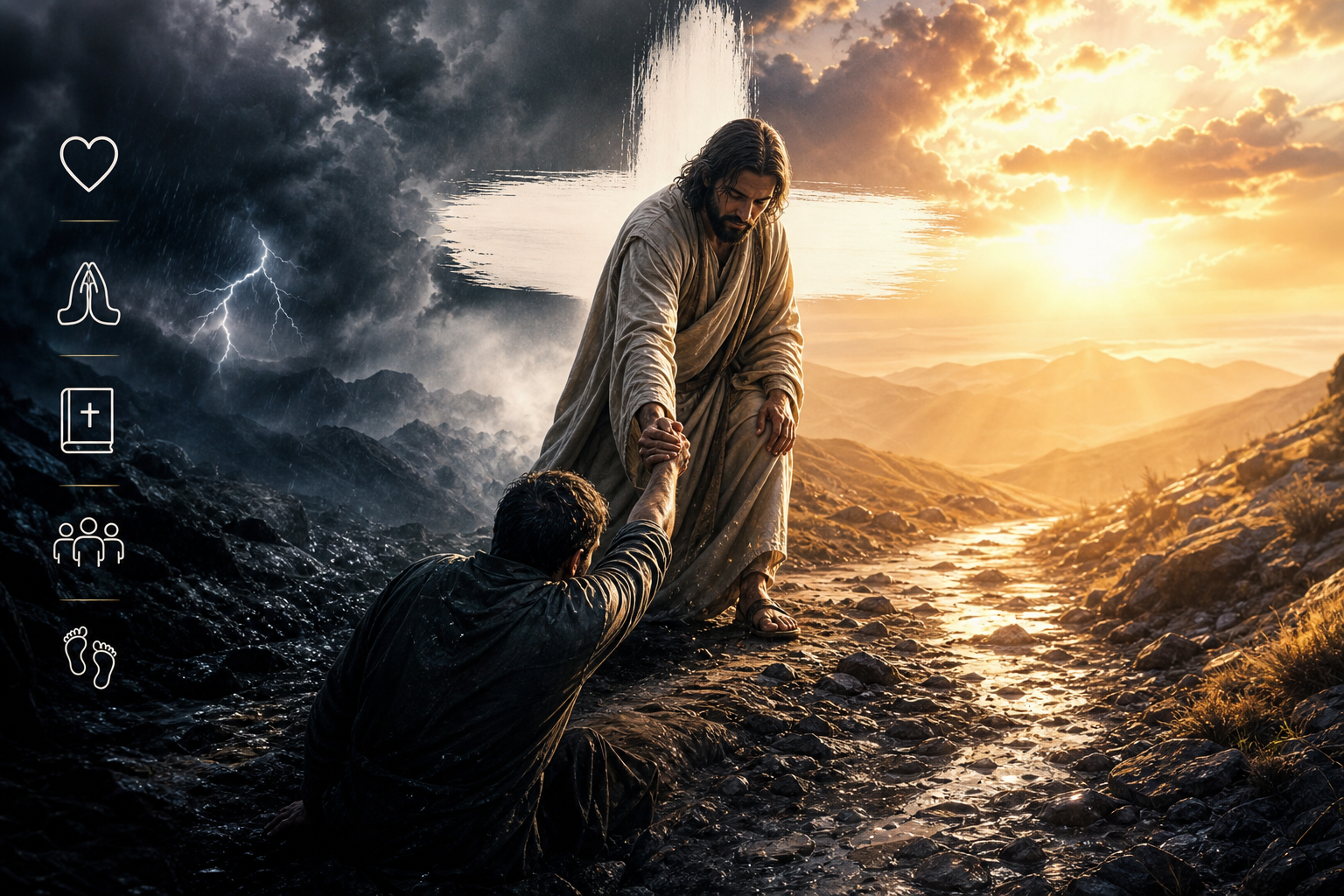
In practice, it’s as if Jesus is saying, “What scares you, I’ve already faced—and I beat it.” That doesn’t erase fear, but it gives you a place to bring your anxiety. You can feel the weight of what’s hard, but you don’t lose sight of the bigger story.
This way of seeing things changes how you deal with both big and small challenges. Next time you think, “I can’t do this,” remember: Christian courage isn’t “I can do it,” but “He’s already done it.” At first, it’s a small shift. But over time, it really does change how you move through life.
I’ve watched people walk through layoffs, bad news from the doctor, and family crises with their heads up—not because they felt strong, but because they knew Jesus already handled the worst and came out victorious.
Not all fear comes from dramatic threats. Sometimes it’s a steady, low-level anxiety that wears you down.
Jesus gets that. That’s why he says, “Don’t let your hearts be troubled and do not be afraid.” He isn’t just saying “don’t fear”—he’s offering to let his peace fill the space where fear usually lives.
What Jesus gives isn’t denial. It’s a peace solid enough to hold you, right where fear would normally take over.
And this is something you have to practice, sometimes minute by minute. On rough days, I’ve had to silence my phone, take a walk, or pray a brief prayer, just to keep anxiety from taking over.
Resumo rápido: Jesus doesn’t pretend fear isn’t real. He invites you to let his peace be bigger. When fear rises, ask yourself: if I let Christ’s peace lead right now, what would my next move be?
Choosing peace might look small, but it’s powerful. For most of us, courage shows up not in big heroics but in refusing to let fear set the tone for the day.
I’ve seen this play out in tiny decisions, like waiting before replying to an angry email. It’s a habit, built one choice at a time.
At home, living out this peace can cut off pointless arguments or lift that heaviness that sometimes just settles in. Choosing peace in the details often ends up being more practical than you’d think.
Locked Doors, Real Fear, and New Boldness
After Jesus’ crucifixion, everything is upside down. The disciples, who once followed him in public, are now hiding behind locked doors, afraid. That’s exactly where Jesus appears—without knocking—and says, “Peace.”
This isn’t just a casual greeting. He shows his wounds as proof of what he’s endured and gives them a mission: “As the Father has sent me, I am sending you.”
What always gets me is that Jesus doesn’t lecture them for being scared. He changes everything with his presence, peace, and the purpose he gives.
The scars on his hands are real—reminders of suffering, but also of victory. Here, courage isn’t about not having scars.
It’s about moving forward with them.
I’ve had seasons where I thought I had to get rid of all fear before I could step out and do something brave. But this scene makes it clear: courage is built right in the middle of feeling exposed. That’s when Jesus shows up and calls you to something bigger.
After this meeting, the disciples stopped hiding and started telling everyone about the resurrection. Not because their fear vanished, but because Jesus’ presence and calling changed what they thought was possible. The change wasn’t instant, but it was real.
Courage Didn’t End With the First Disciples
The story doesn’t end there. Later, Paul faces prison, rejection, and discouragement. In one of those moments, the Lord speaks to him directly: “Take courage!” This isn’t just a phrase from the past; it’s a living word for someone who’s already seen a lot.
Paul knew the risks: violence, rejection, possibly death. Yet he hears the same message Jesus gave the original disciples. This shows that courage isn’t a one-time thing—you need it on the first day and every day after, especially when you feel like you’ve failed or have to start over.
I’ve had to look for courage after projects crashed or criticism caught me off guard. It’s then that Jesus’ call comes through: courage isn’t about feeling strong, but about stepping forward even when you’re still shaking.
Dica importante: Don’t wait until you “feel fearless” to move ahead. The way Jesus frames courage, it’s a choice you make over and over, especially after a setback.
This teaches me that the kind of courage Jesus talks about is persistent and resilient. It’s not about never doubting, but about coming back to the source, even for the hundredth time.
Where Does Courage Show Up in Real Life?
Modern challenges are different than those ancient storms or locked doors. Most of us face worries about the future, job stress, tough relationships, or news that keeps us up at night.
The courage Jesus teaches takes different forms. Sometimes it’s asking for help when you’re overwhelmed by anxiety.
Other times it’s forgiving someone who hurt you. It might mean sticking with a job or a relationship, even when it’s hard to see results.
What matters is, in every situation, courage isn’t something you make up alone. It comes from Jesus’ presence, his peace, and his victory.
In my experience, one of the bravest things you can do is admit your fear but refuse to let it call the shots. I’ve had to open up to trusted friends when things felt dark, and I realized it wasn’t just their encouragement that helped. It was the deeper sense that I wasn’t alone—the same assurance Jesus gave his first followers, to Paul, and still gives now.
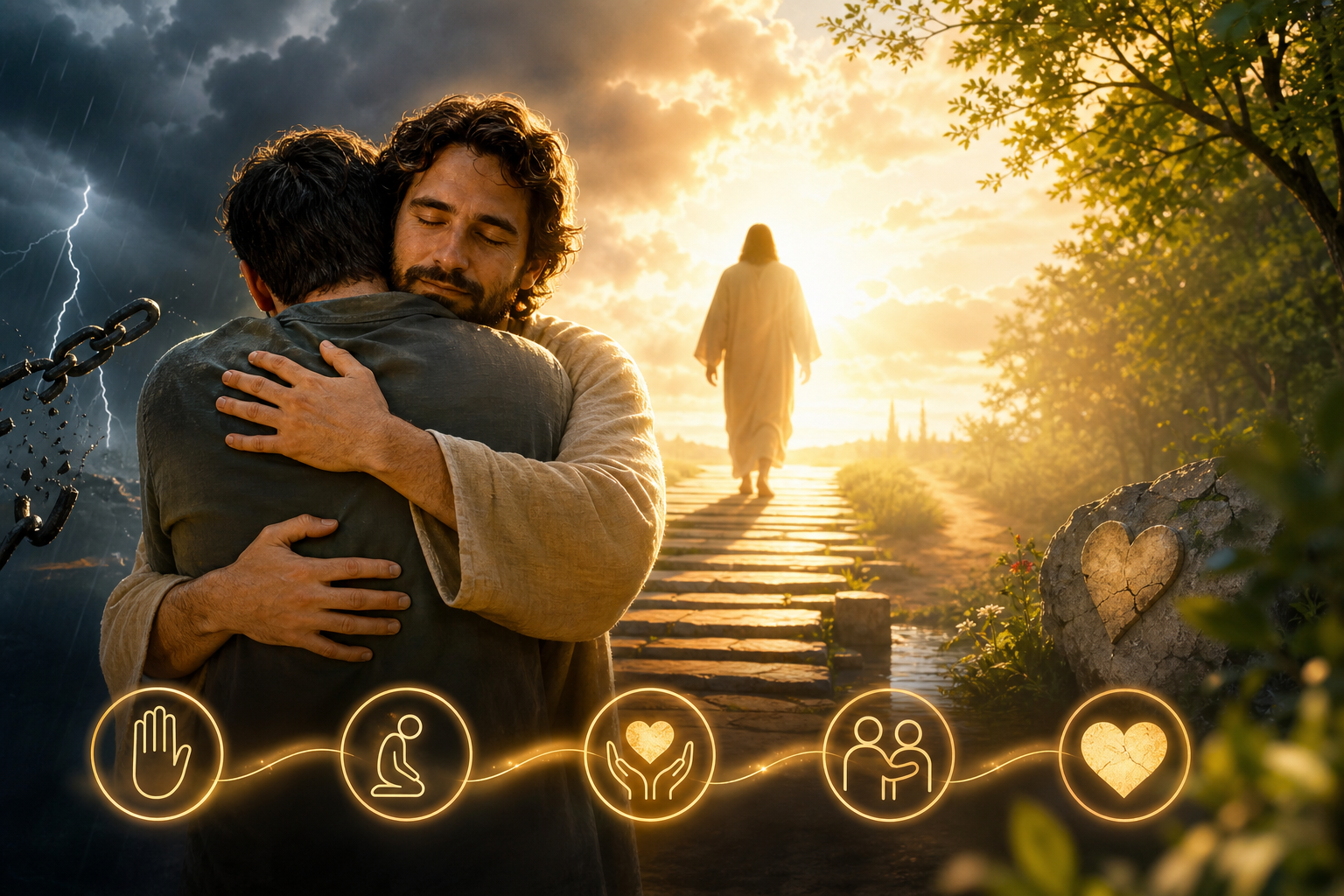
Jesus’ invitation about fear and courage always comes back to relationship: trusting his presence in your storms, letting his peace fill anxious spaces, and remembering that he has already won. You don’t have to face anything alone, or pretend to be strong all the time.
That voice still speaks: “It’s me. Don’t be afraid.”
Where in your life does courage feel hard to find? If you could hear Jesus in the middle of your fear, what do you think he’d say right now?
This text is for spiritual reflection and does not replace professional counseling or medical care.